A melon that smells of nothing. A pineapple that turns out to be all core. A mango that goes from rock-hard to brown in a single afternoon on the windowsill. Most of us have bought all three, and the sticker on the fruit never warned us. Labels tell you variety and origin, not ripeness. That part is down to you, and it takes about twenty seconds per fruit once you know what you are checking for.
Four senses do the work: smell, touch, sight and — for one fruit only — sound. Here is how to use them on the four fruits that cause the most disappointment at the till.
Start with your nose
Smell is the most reliable clue for ripe fruit, and it costs nothing. Lift the fruit and sniff close to the stem end, then the blossom end — the round dimple opposite the stem. That is where the aromas collect. Ripe melons, pineapples, mangoes and kiwis all release something recognisable at one or both spots.
No scent at all usually means underripe. A sharp, alcoholic or vinegary smell means fermentation: the fruit is past its best, even if it still looks fine. Sniffing the middle of the skin tells you very little, so don't bother.
Melons: scent, slip and sound
For a cantaloupe or any netted melon, the skin beneath the netting should have shifted from green to cream or tan. Press the blossom end with your thumb; a ripe one gives very slightly, the way a firm peach does. And smell it — a cantaloupe with no fragrance is a waste of money. Some melons "slip" from the vine when ripe, leaving a small, clean indentation at the stem end. That hollow is a good sign.
Watermelon plays by different rules, because scent is faint and the rind hides everything:
- The field spot. The patch where the melon rested on the ground should be cream or butter-yellow. White or green means it was picked early.
- Heft. For its size, a ripe watermelon feels heavy. Water is most of what you are buying.
- Sound. Rest it on one palm and tap it with the flat of the other. A deep, hollow thrum is what you want. A dull thud suggests underripe; a sharp, high ping can mean overripe and mealy.
Pineapples: leaves, base and weight
Pineapples are harvested mature but not ripe, and — unlike mangoes — they do not improve much once cut from the plant. That makes the shop check more important, not less.
Look at the skin: colour moves up from the base as the fruit ripens, so a good pineapple shows gold creeping up the sides with the crown end still green. One that is green all over will stay sharp and acidic. Smell the flat base. Sweet and tropical is right; nothing means underripe; cider-like means too far gone.
The leaf test — gripping a leaf from the centre of the crown and tugging gently — is a rough guide rather than a rule. Some ripe pineapples hold their leaves tightly. The reliable signs are weight (heavy for its size), a faint give when squeezed, and a clean, dry base. Skip anything with soft brown patches, weeping at the bottom or mould around the base.
Mangoes: shoulders before colour
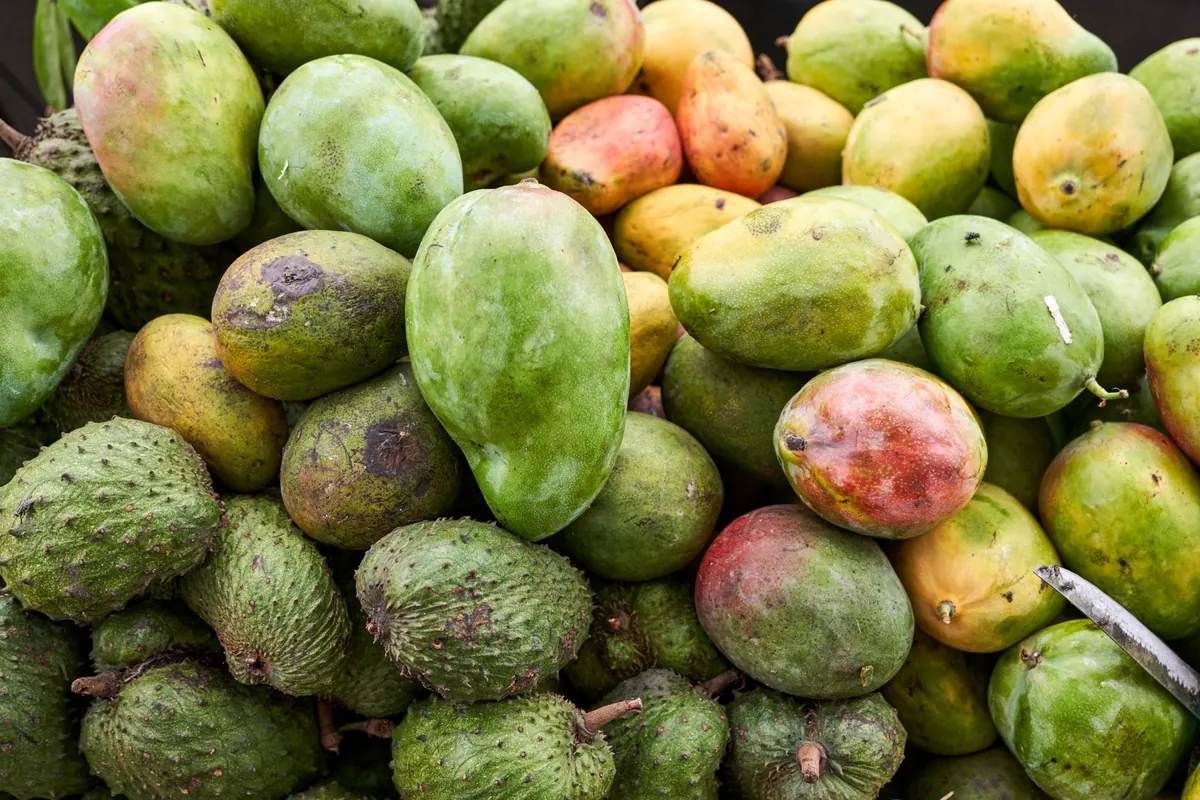
Colour is the worst way to judge a mango. Many varieties stay green-skinned when fully ripe, and a red blush only means the fruit faced the sun. Look instead at the shoulders: the two rounded areas either side of the stem. On an underripe mango they sit flat or sunken. On a ripe one they fill out and rise slightly above the stem, giving the fruit a fuller, rounder shape.
Then smell at the stem end. Ripe mango is sweet and faintly resinous, almost pine-like. Then cradle it and squeeze very gently. It should give like a ripe avocado — a little, evenly, all over. Soft patches, black sap at the stem or wrinkled skin all mean trouble.
Kiwis: softness without squash
Kiwi fruit is sold firm and stays that way for weeks in the fridge. To check one, hold it in your palm and press the side gently with your thumb near the stem end. Ready to eat, it yields slightly under gentle pressure — no more than that. Rock-hard means underripe; leave it on the counter with a ripe banana in a paper bag for a day or two. Very soft, wrinkled or damp at the stem means overripe, and the flavour will be flat.
The four-sense checklist
- Smell at the stem end and the blossom end. Sweet and specific: ready. Nothing: wait. Sharp or alcoholic: leave it.
- Touch with gentle thumb pressure. Slight give is right; a dent that stays is not.
- Colour as a supporting clue only. Judge the background colour, not the blush.
- Sound for watermelon alone: hollow and deep, never dull or pingy.
- Weight relative to size. Heavy fruit is juicy fruit.
- Anything to avoid: soft patches, weeping, mould, wrinkled skin, no scent at all.
What to do once you get them home
Mangoes and kiwis keep ripening on the counter, so check them daily and move them to the salad drawer once they give to a gentle press. A paper bag with a ripe banana speeds things along; a plastic bag traps moisture and invites mould. Pineapples and watermelons are as ripe as they will ever be, so eat them soon.
Whole ripe melons can go in the fridge to slow things down, but once cut they must be refrigerated, wrapped, and eaten within a few days — the scent travels through everything else in there. Cubed melon in a sealed tub is fine for a couple of days, no longer.
None of this is complicated. Smell the ends, press the shoulders, feel the weight, and tap the watermelon. Twenty seconds in the shop saves a week of waiting for something that was never going to ripen.
Photo: Xavier Messina / Pexels