Stone fruit is picked firm. That is not a flaw in the system; it is how peaches, nectarines, plums and cherries travel without turning to jam in the crate. What happens next is mostly up to you. Leave a hard peach on the worktop and it will soften, mellow and start to smell like a peach. Leave it in the fridge and it will sit there doing almost nothing until it turns woolly. Get the timing right and you eat fruit at its best; get it wrong and you wonder why shop-bought peaches are so disappointing.
Which stone fruit ripens after picking, and which does not
Peaches, nectarines and most plums keep ripening once they leave the tree. They soften, their acidity drops away and their aroma develops. They will not gain much sugar, because the sugar level was effectively fixed at harvest, but they will taste sweeter as the sharp edge fades.
Cherries are the exception. Once picked, a cherry is as ripe as it is ever going to be. A firm, dark, glossy cherry left on the counter does not ripen; it simply softens, dulls and eventually wrinkles. So the split is straightforward: counter for peaches, nectarines and plums, fridge for cherries from the moment you get them home.
How to check ripeness without bruising anything
Thumbnail dents are permanent. Press with the pad of your thumb, or better, cradle the fruit in your palm and judge it as a whole.
- Background colour. Look at the side away from the sun-blushed cheek. A peach or nectarine moving from green to cream or gold is a better signal than how red it looks. Plums should have an even, deep colour with no green shoulders.
- Smell. Hold the fruit up to your nose at the stem end. Ripe peaches and nectarines smell sweet and floral. Plums smell like plum. If there is nothing there, it is not ready.
- Gentle pressure. Press just beside the stem. A little give means eat today or tomorrow. Rock-hard means leave it. Soft all over means cook it or eat it now.
- Weight. A ripe fruit feels heavy for its size. Light, dry-feeling fruit is usually disappointing inside.
- The stem end. On plums, a slight softening and a faint wrinkle around the stalk is a good sign, not a fault.
Ripening on the counter: the basic method
- Spread the fruit out in a single layer on a tray, shallow bowl or plate. Piling them up means the bottom fruit bruises and the top ones ripen unevenly.
- Keep them at normal room temperature, roughly 18–22°C, away from direct sun and away from a hot radiator or cooker.
- Leave air moving around them. A sealed tub traps moisture and encourages mould; a paper bag or open bowl is better.
- Check twice a day, morning and evening. In warm weather a hard peach can go from unyielding to perfect within a day, and past perfect within another.
- Turn them gently once a day so one side is not taking all the weight.
As a rough guide, a hard peach takes two to four days, a nectarine often a day less, and plums anywhere from two to five days depending on variety and how firm they were when bought.
The paper bag trick, used carefully
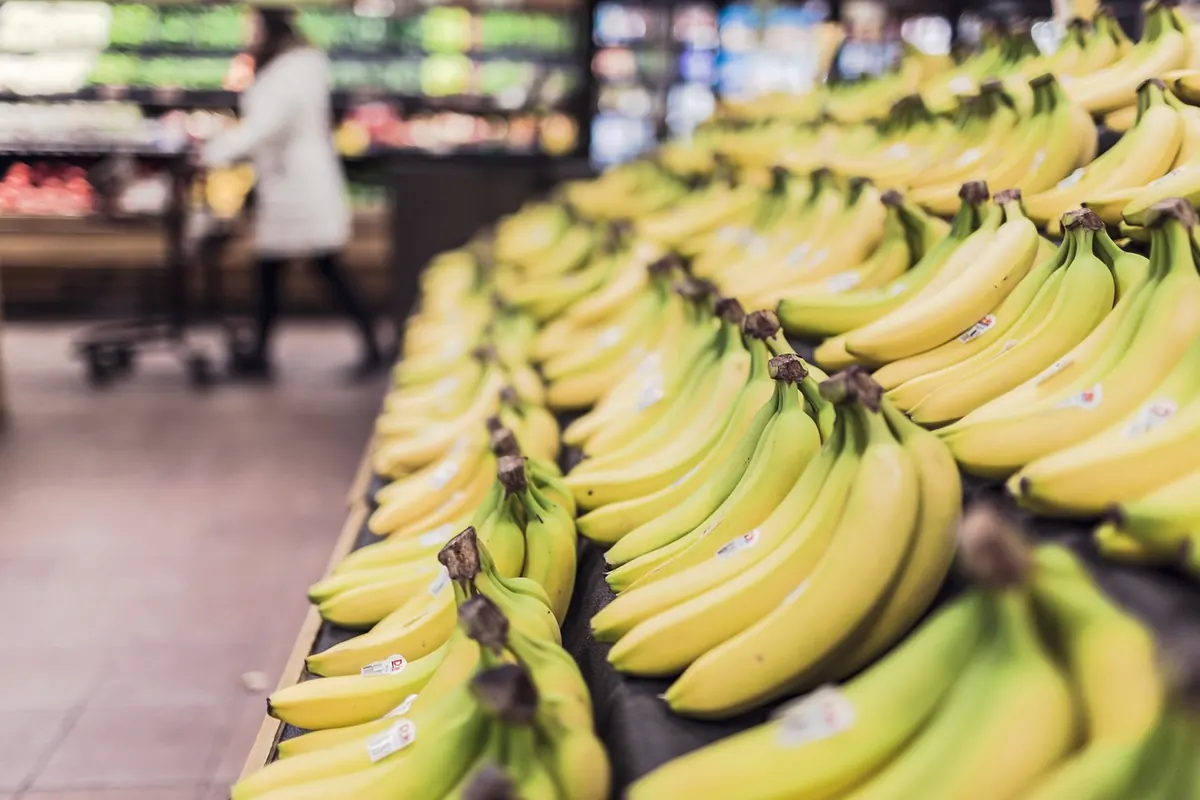
Ripe fruit gives off ethylene gas, which speeds up ripening in its neighbours. Putting genuinely hard peaches or plums in a paper bag with a ripe banana or apple concentrates that gas and can shave a day or more off the wait.
Two warnings. Use paper, not plastic, because plastic traps moisture and rot. And check every few hours once things start to move, because the bag can take fruit from hard to over-ripe faster than you expect. The moment a fruit yields slightly, take it out and eat it or chill it.
Ready fruit needs nothing from you but a plate and a little patience with the knife.
Fridge rules, and bringing fruit back
The fridge is a pause button, not a ripening chamber. Once a peach or plum is ripe, chilling slows the decline: a few days for peaches and nectarines, up to about a week for plums. Keep them in the salad drawer, loosely wrapped in paper or in an open container rather than pressed against the back wall.
Long chilling has a cost. Peaches and nectarines held too cold for too long lose their juicy texture and turn dry and woolly, and no amount of counter time will bring that back. So chill ripe fruit briefly, not indefinitely.
Take fruit out an hour before eating. Cold mutes aroma and flavour badly, which is why a peach eaten straight from the fridge tastes of very little and the same peach at room temperature tastes like summer. Cherries, by contrast, are good cold: keep them unwashed in the fridge with a little airflow and wash them just before you eat them.
Fruit by fruit
Peaches and nectarines
Treat them as the same fruit with different skin. Both soften quickly and both are easily ruined by squeezing. If you have a batch ripening at once, move the ready ones to the fridge and leave the firm ones out, so you get a steady supply rather than three perfect peaches on the same afternoon.
Plums
Dessert plums and greengages soften faster than the firmer, larger varieties sold for cooking. A plum that is firm but deeply fragrant usually eats better than one that is soft and bland. Split skins mean over-ripe or rough handling; use those for roasting, compote or a crumble rather than eating out of hand.
Cherries
Buy the best you can, because nothing you do at home will improve them. Look for plump fruit with green, flexible stalks and glossy, unbroken skin. Keep the stalks on; they slow moisture loss. If a cherry smells fermented or the skin is sticky and weeping, it is past saving.
A simple routine that works
Unpack stone fruit into a single layer on the counter the day you buy it. Check it morning and evening with your palm, not your fingertips. Move anything ready into the fridge, leave the rest out, and use a paper bag with a banana only for the fruit that refuses to budge. Take peaches, nectarines and plums out of the fridge an hour before you plan to eat them, and keep cherries cold until the moment they hit the bowl. Do that and you will rarely meet a mealy peach again.
Photo: Hans / Pixabay